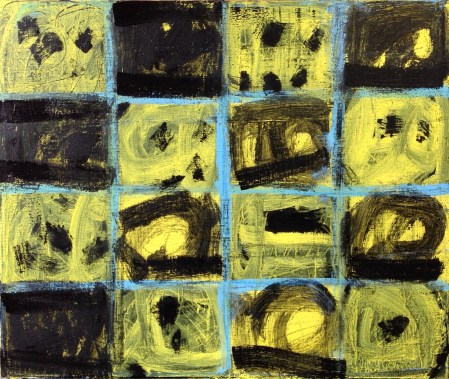
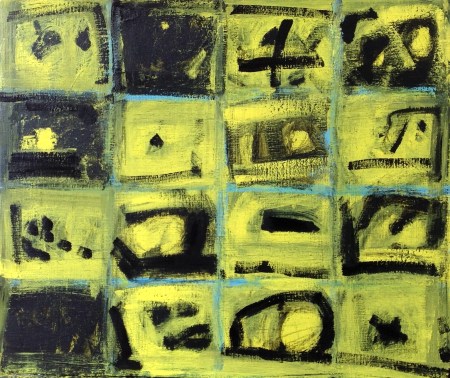
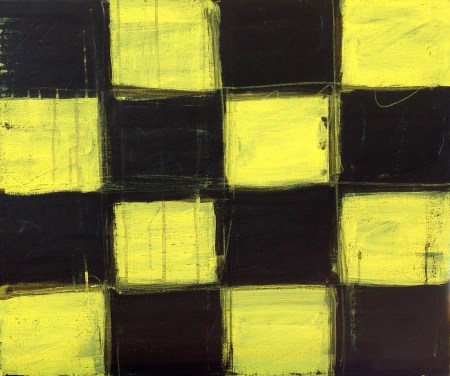
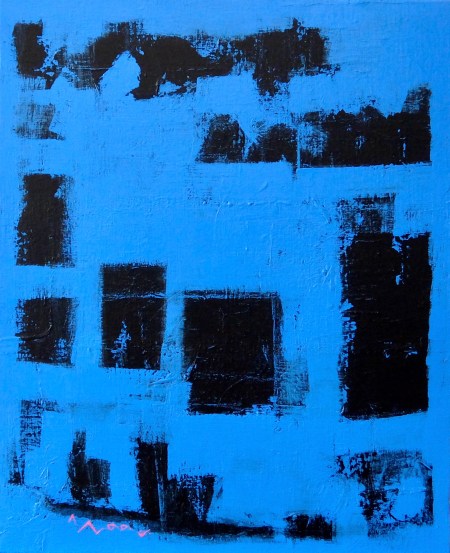
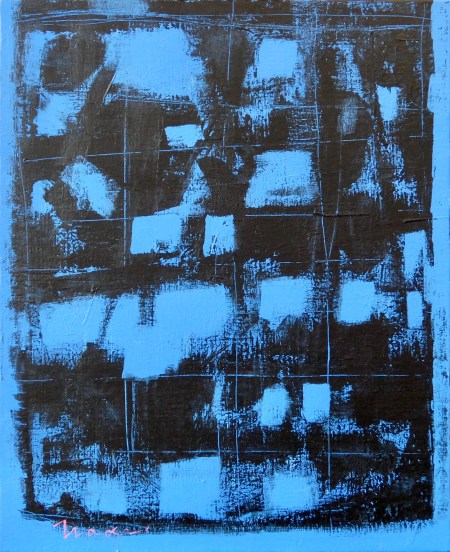
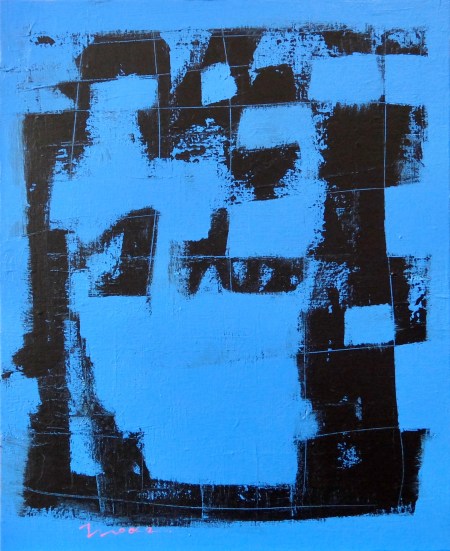
母 5

Posted in Photos 2011-2021 with tags , , , , , , , on 9 February 2021 by kenwada

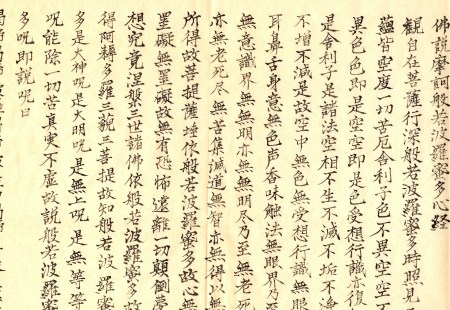
母 5
母の写経「佛説摩訶般若波羅蜜多心経」
2010年5月

My Mother 5
My Mother’s Sutra Copy
May 2010

Ma Mère 5
Le Sutra de Ma Mère
mai 2010

Sonoko WADA, 2010, India ink on Japanese paper, 24.2×33.0 cm

This is a sutra copy written by my mother on May 24, 2010.
My mother always copied sutras with Indian ink and an ink brush every morning after chanting sutras and housework.
Every morning!
This is a Buddhist training of copying Buddhist scriptures to another paper.
Then, when 50 or 100 sutras used Japanese calligraphy were collected, she took them to the temple of the WADA family in Takao, Tokyo.
And the chief priest of the temple burned them as a Buddhist tradition.
Then, the next day, my mother would start copying sutras from the first one again.
My mother always finished one piece a day.
And after another 50 or 100 days, my mother took them to the temple.
She continued to copy sutras every day until she collapsed in February 2011 due to subarachnoid hemorrhage.
Every day!
It’s been exactly 10 years since then this month.
She now has dementia, but she is well and lives calmly in a wheelchair with my family at home.
She is 86 years old this year.
Although my mother didn’t say anything to me about hand-copying sutras, she taught me a lot of important spirits and hearts that I need as an artist.

February 9. 2021
Ken WADA

Is Sonia a Great Sinner?

Posted in Essay 2012-2026 with tags , , , , , , , , on 8 February 2021 by kenwada

CRIME AND PUNISHMENT, FYODOR DOSTOYEVSKY, TRANSLATED BY DAVID MAGARSHACK, THE PENGUIN CLASSICS

‘I was lying on the bed just then ー well, why keep it dark? ー I was dead drunk at the time, and suddenly I heard my Sonia (like a little lamb she is, the poor child, and her voice, too, so meek ー she has fair hair and her face has always been so thin and pale), “Well,” she said, “you don’t want me to do that, do you?” And Darya Franzovna, a wicked woman who’s been in trouble with the police, had several times already been making inquiries about her through our land lady. “Why,” my wife replied jeeringly, “what’s so terrible about that? Who are you keeping it for? What a treasure!” But don’t blame her, don’t blame her, sir, don’t blame her! She was not in her right mind when she said it. She was beside herself, and ill, too, and the children were hungry and crying, and she didn’t mean it, really. Just wanted to say something humiliating. She can’t help herself, I’m afraid. It’s her character, you see. And when the children begin to cry, even if it is only because they’re hungry, she at once starts beating them. And so at about six o’clock I saw Sonia get up, put on her coat and a shawl, and leave the room, and at about nine o’clock she came back. She came back, went straight up to my wife, and put thirty roubles on the table before her without uttering a word. Not a word did she utter, nor did she even look at my wife, but just took our large green drap-de-dames shawl (we have such a shawl which we all use, a drap-de-dames shawl), put it over her head and face, and lay down on her bed with her face to the wall, her thin shoulders shaking all the times, And I, sir, was just lying there as I did before ー dead drunk. And it was then, young man, that I saw my wife, also without uttering a word, walk up to Sonia’s bed, go down on her knees, and kiss Sonia’s feet. And the whole evening she was on her knees, kissing Sonia’s feet and refusing to get up. And eventually they both fell asleep in each other’s arms ー the two of them. Yes, sir, the two of them, and me lying there drunk as a lord!’
(ibid. p.35)


Ken WADA, 2014, Watercolour and pencil on paper, 27.3×22.0cm

‘So you are fond of her?’
‘Fond of her? Of course I am,’ Sonia said in a plaintive, drawn-out voice, folding her hands in distress. ‘Oh, if you ー if you only knew her! She’s just like a child really. She ー she’s almost out of her mind with grief. And what a clever woman she used to be ー how generous ー how kind! Oh, you don’t know anything ー anything!’
(ibid. p.333)

‘I did not bow down to you, I bowed down to all suffering humanity,’ he said wildly, and walked off to the window. ‘Listen,’ he added, coming back to her in a minute. ‘I told some bully an hour or so ago that he was not worth your little finger and ー and that I did my sister an honor to-day when I made her sit beside you.’
‘Oh, you shouldn’t have said that to them! And was she there, too?’ Sonia cried, frightened. ‘Sit beside me? An honour? Why, I’m a dishonourable creature! I’m a great, great sinner! Oh, what did you say that for?’
(ibid. p.337)

A book was lying on the chest of drawers. He had noticed it every time he walked up and down the room. It was the New Testament in a Russian translation. The book was an old one, well thumbed, bound in leather.
‘Where did you get that?’ he shouted to her across the room.
She was still standing in the same place, three steps from the table.
‘Someone brought it to me,’ she replied, as though reluctantly and without looking at him.
‘Who brought it?’
‘Lisaveta did. I asked her to.’
‘Lisaveta! That’s strange!’ he thought.
Everything about Sonia seemed stranger and more wonderful to him every minute.
‘Where’s that place about Lazarus?’ he asked suddenly.
Sonia’s eyes were fixed stubbornly on the ground, and she did not reply. She stood a little sideways to the table.
‘Where is the place about the raising of Lazarus? Find it for me, Sonia.’
She gave him a sidelong glance.
‘It isn’t there,’ she whispered sternly, without coming closer to him. ‘It’s in the fourth gospel.’
‘Find it and read it to me,’ he said, sitting down, with his elbow on the table and his head on his hand, and, fixing his eyes on the opposite wall, he looked away sullenly, prepared to listen.
(ibid. p.339)

Again it was a bright and warm day. Early in the morning, about six o’clock, he went off to work on the bank of the river in a shed where there was a kiln for baking alabaster and where they used to crush it. Only three prisoners went there. One of the prisoners, accompanied by a guard, went back to the fortress for some tools; the other one was chopping wood and putting it into the furnace. Raskolnikov came out of the shed to the bank of the river. He sat down on a pile of timber by the shed and began looking at the wide, deserted expanse of the river. From the steep bank a wide stretch of the countryside opened up before him. Snatches of a song floated faintly across from the distant bank of the river. There in the vast steppe, flooded with sunlight, he could see the black tents of the nomads which appeared just like dots in the distance. There there was freedom, there other people were living, people who were not a bit like the people he knew; there time itself seemed to stand still as though the age of Abraham and his flocks had not passed. Raskolnikov sat there, looking without moving and without taking his eyes off the vast landscape before him; his thoughts passed into daydreams, into contemplation; he thought of nothing, but a feeling of great desolation came over him and troubled him.
Suddenly Sonia was beside him. She had come up noiselessly and sat down close to him. It was still very early; the morning chill had not yet abated. She wore her old shabby coat and the green shawl. Her face still showed traces of illness: it was very thin and pale. She smiled at him joyfully and tenderly, but as usual, held out her hand to him timidly.
(ibid. p.556)
Untitled 2021 No.5

Posted in Works 2021 with tags , , , , , , , , , , , , , , , , , , , , , on 7 February 2021 by kenwada

無題 2021 No.5
2021年2月
北軽井沢 作品 No.422
画布にアクリル
60.6×72.7 cm

Untitled 2021 No.5
February 2021
Kitakaruizawa Works No.422
Acrylic on canvas
24.0×29.0 in.

Sans Titre 2021 Nº5
février 2021
Kitakaruizawa Œuvres N°422
Acrylique sur toile
60.6×72.7 cm

Today’s Studio Photo No.2

Posted in TSP 2021 with tags , , , , , , , , on 2 February 2021 by kenwada

Acrylic on canvas, 24.0×29.0 in. (60.6×72.7 cm)
February 2, 2021

必ず汚いのは出てくるから、それを汚いと思わないタイミングで絵画に入る。
絵画制作は、波状/連動とストップ、波状/連動とストップ、の繰り返し。
多くのミステイクは、ここはストップなのに、いたずらに仕掛ける。
ここは仕掛けなのに、やたらと立ち止まる。
実は意外とシンプルでその辺りにある。
その対策として、絵画制作のための安定して力を出すマインドの構築が是非とも必要。
天性でもっていなければ、事前に準備してマインドを身につける。
天性の不足は、実は自分が思うほど決定的なデメリットとはならない。
いずれにしても、絵画として表出してきたものは、必ずや個人的な気質の影響を強く受けたものになる。
それは芸術に限らず、広く言えば、どのような仕事においても、結局は個人的な気質の影響を色濃く反映したものになるが、特に Painting においては、それが色と形として、はっきりと目に見える形で、誰の目にもわかりやすく出現する。
ある意味で非常に残酷だけれども、見方を変えればその点においてフェアだとも言える。
Painting の核心には、いつでも何かピュアなものがある。
個人的な気質の影響の支配から抜け出すために、自分にとって結果が明確でない、わからない、手のうちにない絵画を常に求めようとすること。
絵画を自らコントロールしないこと。
Painting は、その人間に直結した非常に不可思議な行為である。
言葉よりも原始的、太古の洞窟の壁画、洞窟の木霊、原始本能のぶつかり合い、なすりつけ合い、そしていつでもどこか何か不細工なもの、人間は皆病んでいるから、僕は生まれてから、ああ、この人は病んでいないなという人にまだ一度として出会ったことがない・・・。
文章よりも何か直接的な生々しい、おどろおどろしいものだと思う。
簡単に言えば、異様なものだと思う。
観者は、その人間に直結した非常に不可思議な表出を、色と形として味わう/味あわされることになる。
20年近くかかって、ようやくその面白さがわかってきた。
以上、すべて自分にひとりごと。

Today’s Studio Photo No.1

Posted in TSP 2021 with tags , , , , , , , , on 1 February 2021 by kenwada

Acrylic on canvas, 24.0×29.0 in. (60.6×72.7 cm)
February 1, 2021

The Hill We Climb

Posted in Essay 2012-2026 with tags , , , , , on 27 January 2021 by kenwada
https://www.youtube.com/watch?v=Wz4YuEvJ3y4

The Hill We Climb
by Amanda Gorman

When day comes we ask ourselves,
where can we find light in this never-ending shade?
The loss we carry,
a sea we must wade
We’ve braved the belly of the beast
We’ve learned that quiet isn’t always peace
And the norms and notions
of what just is
Isn’t always just-ice
And yet the dawn is ours
before we knew it
Somehow we do it
Somehow we’ve weathered and witnessed
a nation that isn’t broken
but simply unfinished
We the successors of a country and a time
Where a skinny Black girl
descended from slaves and raised by a single mother
can dream of becoming president
only to find herself reciting for one
And yes we are far from polished
far from pristine
but that doesn’t mean we are
striving to form a union that is perfect
We are striving to forge a union with purpose
To compose a country committed to all cultures, colors, characters and
conditions of man
And so we lift our gazes not to what stands between us
but what stands before us
We close the divide because we know, to put our future first,
we must first put our differences aside
We lay down our arms
so we can reach out our arms
to one another
We seek harm to none and harmony for all
Let the globe, if nothing else, say this is true:
That even as we grieved, we grew
That even as we hurt, we hoped
That even as we tired, we tried
That we’ll forever be tied together, victorious
Not because we will never again know defeat
but because we will never again sow division
Scripture tells us to envision
that everyone shall sit under their own vine and fig tree
And no one shall make them afraid
If we’re to live up to our own time
Then victory won’t lie in the blade
But in all the bridges we’ve made
That is the promised glade
The hill we climb
If only we dare
It’s because being American is more than a pride we inherit,
it’s the past we step into
and how we repair it
We’ve seen a force that would shatter our nation
rather than share it
Would destroy our country if it meant delaying democracy
And this effort very nearly succeeded
But while democracy can be periodically delayed
it can never be permanently defeated
In this truth
in this faith we trust
For while we have our eyes on the future
history has its eyes on us
This is the era of just redemption
We feared at its inception
We did not feel prepared to be the heirs
of such a terrifying hour
but within it we found the power
to author a new chapter
To offer hope and laughter to ourselves
So while once we asked,
how could we possibly prevail over catastrophe?
Now we assert
How could catastrophe possibly prevail over us?
We will not march back to what was
but move to what shall be
A country that is bruised but whole,
benevolent but bold,
fierce and free
We will not be turned around
or interrupted by intimidation
because we know our inaction and inertia
will be the inheritance of the next generation
Our blunders become their burdens
But one thing is certain:
If we merge mercy with might,
and might with right,
then love becomes our legacy
and change our children’s birthright
So let us leave behind a country
better than the one we were left with
Every breath from my bronze-pounded chest,
we will raise this wounded world into a wondrous one
We will rise from the gold-limbed hills of the west,
we will rise from the windswept northeast
where our forefathers first realized revolution
We will rise from the lake-rimmed cities of the midwestern states,
we will rise from the sunbaked south
We will rebuild, reconcile and recover
and every known nook of our nation and
every corner called our country,
our people diverse and beautiful will emerge,
battered and beautiful
When day comes we step out of the shade,
aflame and unafraid
The new dawn blooms as we free it
For there is always light,
if only we’re brave enough to see it
If only we’re brave enough to be it

この ABC News の映像には、心底驚いた、たまげた、衝撃的だった。
涙が全く止まらなくなった。
このかわいらしい小柄な、そしておそらくは想像するに相当お茶目な22才の女性は、いったいなんなんだろうと思った。
メニューインやオイストラフのバイオリンの演奏を初めて聴いた時にだって、僕はこんなに驚きはしなかった。
ジョン・レノンのイマジンを初めて聴いた時にだって、僕はこんなに驚きはしなかった。
どちらかと言うと、カシアス・クレイがソニー・リストンに勝った試合を、初めて観た時の衝撃に近かった。
運動分野的な何かの要素を感じた。
ともかく、僕は紛れもない天才の声を確かに聴いた。
これは是非とも言っていることを完璧に理解しようと思い、普段は素通りしている単語まで入念に辞書を引いて、2時間かかって全訳した。
率直な印象としては、執拗に韻を踏んでくるところは、他の詩人同様だけれども、この afraid-blade-made-glade ときて、タイトルの1行手前の That is the promised glade は限りなく美しい。*¹
後半の might-might-right-birthright も美しい。
それから、行間休止はともかくとして、ピリオドさえも打ってこない。
でも彼女の詩の一番の特徴は、何と言っても、主語と所有格を非常に明確に強調して繰り返してくることだなと思った。*²
この明示は大学で学んだ教育からというよりも、生育歴に関する何ものかから、自然に表出してくるものであるように、僕には直感的に思えた。
We が60回、our が17回、そして来たなーと言う感じで、my が1回。
ここでいかにも待ち構えておいて意図的にはかったな、という感じがすると嫌になるのだけれど、全くそんな感じがしなかった。
ごくナチュラルな感じで、僕は普通にまた詩に戻っていけた。
ここは絵画でいうと、大きな点を打つところに該当するので、非常に大事。
いかにも狙って点を打ってきたなあ、画面の中でよく効いているなあ、インパクトがあるなあ、では見え透いていてまずいところです。
それから、手話のようなこの特異な身振り手振りを、彼女はどこから独創したのだろう。
おそらくは朗読のリズムをとる中で生まれてきたのであろうけれども、僕は今までにこのように朗読する詩人を見たことがない。
僕の頭の中を、ビューンってビューンって、新しい風が吹き抜けていくみたいだった。
その風が強過ぎて、どこからどこへ突き抜けていくのか、僕には全然、その方向性が、ベクトルがつかめなかった。
でもなんだかそれはすごく心地よい体験だった。
とても懐かしい、まるで僕が生まれる以前から、僕が慣れ親しんできたかのような懐かしい母の匂い、子供の頃、寝転んだ時の日向の芝生の匂いがした。
一つ一つ訳しながら、ほぼ同時に、次のシリーズの構想が頭に浮かんだ。
直ちに、ちょうど手元にあったF20号のキャンバスに下絵を始めた。
We the successors of a country and a time
Where a skinny Black girl
descended from slaves and raised by a single mother
can dream of becoming president
その通りです。
是非アメリカ初の女性大統領になってください。

2021年1月27日
和田 健

追伸:この女性を一発で見抜いて招待してきた、今度の新大統領夫人の慧眼は、只者ではない。

後日記:
*¹ この1行が何故美しいかというと、そこに政治思想、主義、主張のようなものが含まれていなくて、字義通りの the promised glade であるからだと思います。
もし彼女がタイトル行の1行手前に意図的に、このオアシス的なほっとする脱力空間を組み立ててきたとするなら、その芸術的な空間識別能力、あるいは空間認識能力とでも呼ぶべきものは、ちょっと並大抵のものではない。
すなわち、この詩全体を私たちが登る丘(The Hill We Climb)に例えた時に、その頂上一歩手前に休息所がある、という安らかなイメージを全体構造として意識して描き、構築してきたと仮定すると。
そして、おそらくは意図的にここに配置してきたのだろうな。

*² 欧米人が、僕が、私が、に限らず、主語を強調してくることは、これまでに何度も体験し、たびたび痛感してきました。
その点は、私たちが話す日本語とは、だいぶ違います。
日本語では、特別な事情でもない限り、ほとんどの場合において、主語はあいまいなままで通りますから。
また、この詩の内容との関連で、ここでは主語を特に明確にしなければならなかったという点も当然あるでしょう。
でも、それらを差し引いても、なおかつ僕には、彼女の詩の特徴として、主語や所有格を強調してくる何らかの傾向があるなと、感じたということです。

Untitled 2021 No.4 ーfrom the series Black and Blue Paintingsー

Posted in Works 2021 with tags , , , , , , , , , , , , , , , , , , , , , on 25 January 2021 by kenwada

無題 2021 No.4
ーシリーズ黒と青のペインティングからー
2021年1月
北軽井沢 作品 No.421
画布にアクリル
65.2×53.0 cm

Untitled 2021 No.4
ーfrom the series Black and Blue Paintingsー
January 2021
Kitakaruizawa Works No.421
Acrylic on canvas
26.0×21.0 in.

Sans Titre 2021 Nº4
ーde la série Noir et Bleu Peinturesー
janvier 2021
Kitakaruizawa Œuvres N°421
Acrylique sur toile
65.2×53.0 cm

Untitled 2021 No.3 ーfrom the series Black and Blue Paintingsー

Posted in Works 2021 with tags , , , , , , , , , , , , , , , , , , , , , on 21 January 2021 by kenwada

無題 2021 No.3
ーシリーズ黒と青のペインティングからー
2021年1月
北軽井沢 作品 No.420
画布にアクリル
65.2×53.0 cm

Untitled 2021 No.3
ーfrom the series Black and Blue Paintingsー
January 2021
Kitakaruizawa Works No.420
Acrylic on canvas
26.0×21.0 in.

Sans Titre 2021 Nº3
ーde la série Noir et Bleu Peinturesー
janvier 2021
Kitakaruizawa Œuvres N°420
Acrylique sur toile
65.2×53.0 cm

Untitled 2021 No.2 ーfrom the series Black and Blue Paintingsー

Posted in Works 2021 with tags , , , , , , , , , , , , , , , , , , , , , on 20 January 2021 by kenwada

無題 2021 No.2
ーシリーズ黒と青のペインティングからー
2021年1月
北軽井沢 作品 No.419
画布にアクリル
65.2×53.0 cm

Untitled 2021 No.2
ーfrom the series Black and Blue Paintingsー
January 2021
Kitakaruizawa Works No.419
Acrylic on canvas
26.0×21.0 in.

Sans Titre 2021 Nº2
ーde la série Noir et Bleu Peinturesー
janvier 2021
Kitakaruizawa Œuvres N°419
Acrylique sur toile
65.2×53.0 cm

Untitled 2021 No.1 ーfrom the series Black and Blue Paintingsー

Posted in Works 2021 with tags , , , , , , , , , , , , , , , , , , , , , on 19 January 2021 by kenwada

無題 2021 No.1
ーシリーズ黒と青のペインティングからー
2021年1月
北軽井沢 作品 No.418
画布にアクリル
65.2×53.0 cm

Untitled 2021 No.1
ーfrom the series Black and Blue Paintingsー
January 2021
Kitakaruizawa Works No.418
Acrylic on canvas
26.0×21.0 in.

Sans Titre 2021 Nº1
ーde la série Noir et Bleu Peinturesー
janvier 2021
Kitakaruizawa Œuvres N°418
Acrylique sur toile
65.2×53.0 cm